Transforming Carbon Accounting:
Overview
Transform a start-up’s manual workflows to an automated platform,
allowing the business to scale rapidly
User research
Service design
Wireframing
User experience design
User interface design
Prototyping
Design system updates
Developer collaboration
Migration strategy
User research reports
Service blueprints
Fully detailed journey maps
Data state models
Design system updates
Wireframes
User interface designs
High-fidelity prototypes
75% faster processing
90% fewer errors
300% capacity increase
20% NPS increase

Figma & Figjam

Notion
When the copy-paste economy is holding back your growth
Picture this: It’s 2023, and carbon accountants are still juggling dozens of spreadsheets, manually copying data between systems, and hoping they haven’t made a calculation error that could cost their clients millions. Meanwhile, regulatory demands are intensifying, clients expect real-time insights, and the team is drowning in manual processes that simply don’t scale.
Sound familiar?
What We
Our approach
Unpick the business reason
Designing beautiful products can be fun, but designing beautiful products that are the crucial step in scaling the business - now that’s what we thrive on.
The Business Need
The business couldn't take on new clients without hiring exponentially more staff
Get under the hood
We don’t believe in designing from an ivory tower. So we rolled up our sleeves and embedded ourselves with the teams doing the actual work.
What We Discovered
Watching carbon accounting consultants work was like watching a masterclass in creative problem-solving - and a horror show of inefficiency. These brilliant professionals were spending 60% of their time on data wrangling (and swearing at Excel spreadsheets) instead of the strategic analysis their clients actually valued.
Workflow complexities
Complex handoffs between team members created single points of failure
Customer communication gaps
Clients had no visibility into project progress, leading to constant status update requests
Knowledge silos
Critical process knowledge lived in people's heads, not systems
Compliance stress
Manual audit trail creation was consuming entire days per project
Mapping the Mess: Current State Analysis
We created comprehensive service blueprints that revealed the true scope of the challenge. To ensure all of our findings were accurately representing the process and pain-points, we validated the blueprints and resulting data models in a series of workshops with the internal team.
What looked like a simple “carbon accounting process” was actually a complex web of:
47
distinct process steps
12
handoff points
8
manual compliance checkpoints
10+
different customer communication touch-points with inconsistent messaging
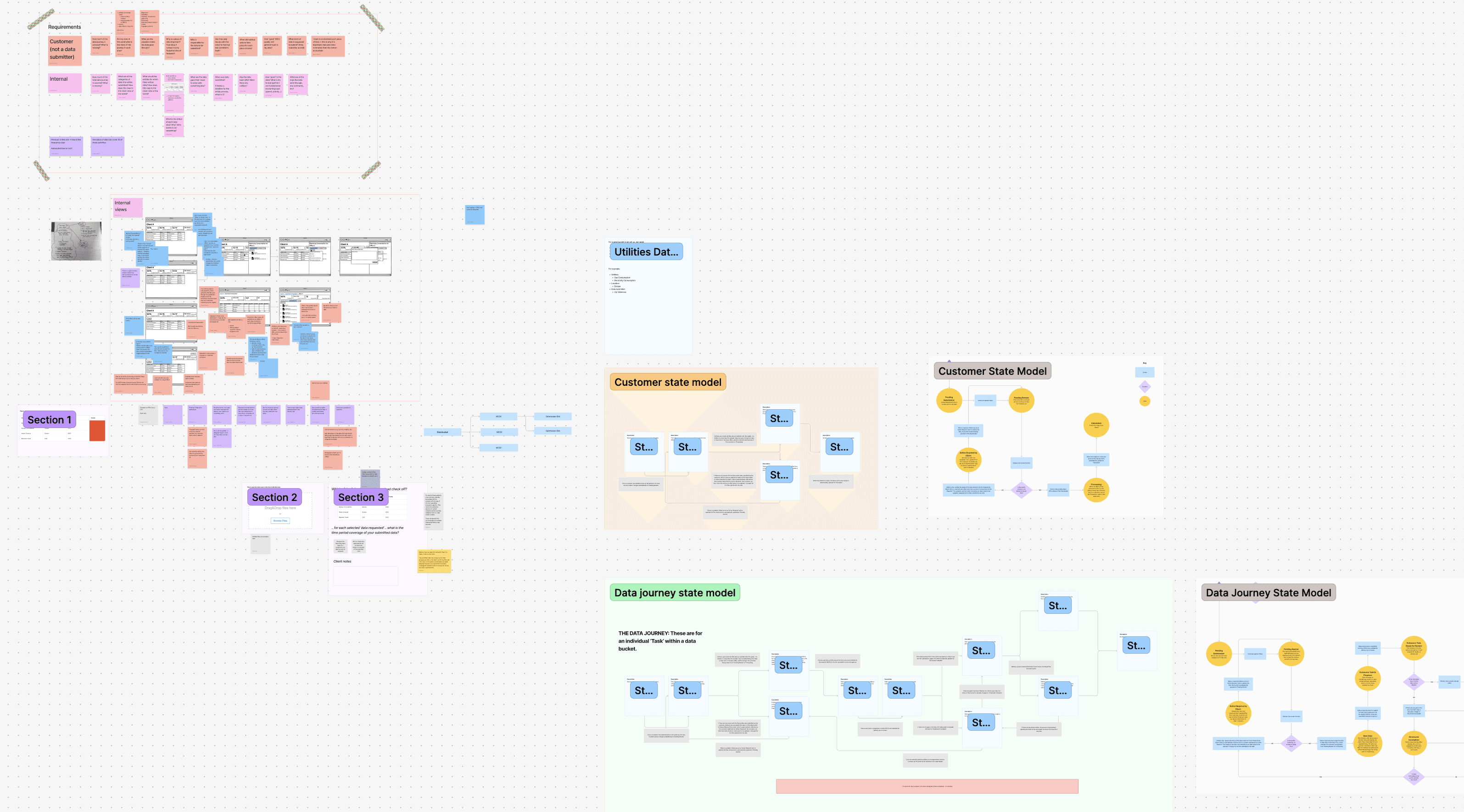
The visualisation was shocking. Even to the team who lived this reality daily.
Rapid low-fidelity iteration
One of our most favourite tools to utilise when designing a solution for a complex problem are low-fidelity, usually hand-drawn wireframes, allowing for large number of ideas to be tested thus reaching the most elegant solution fast.
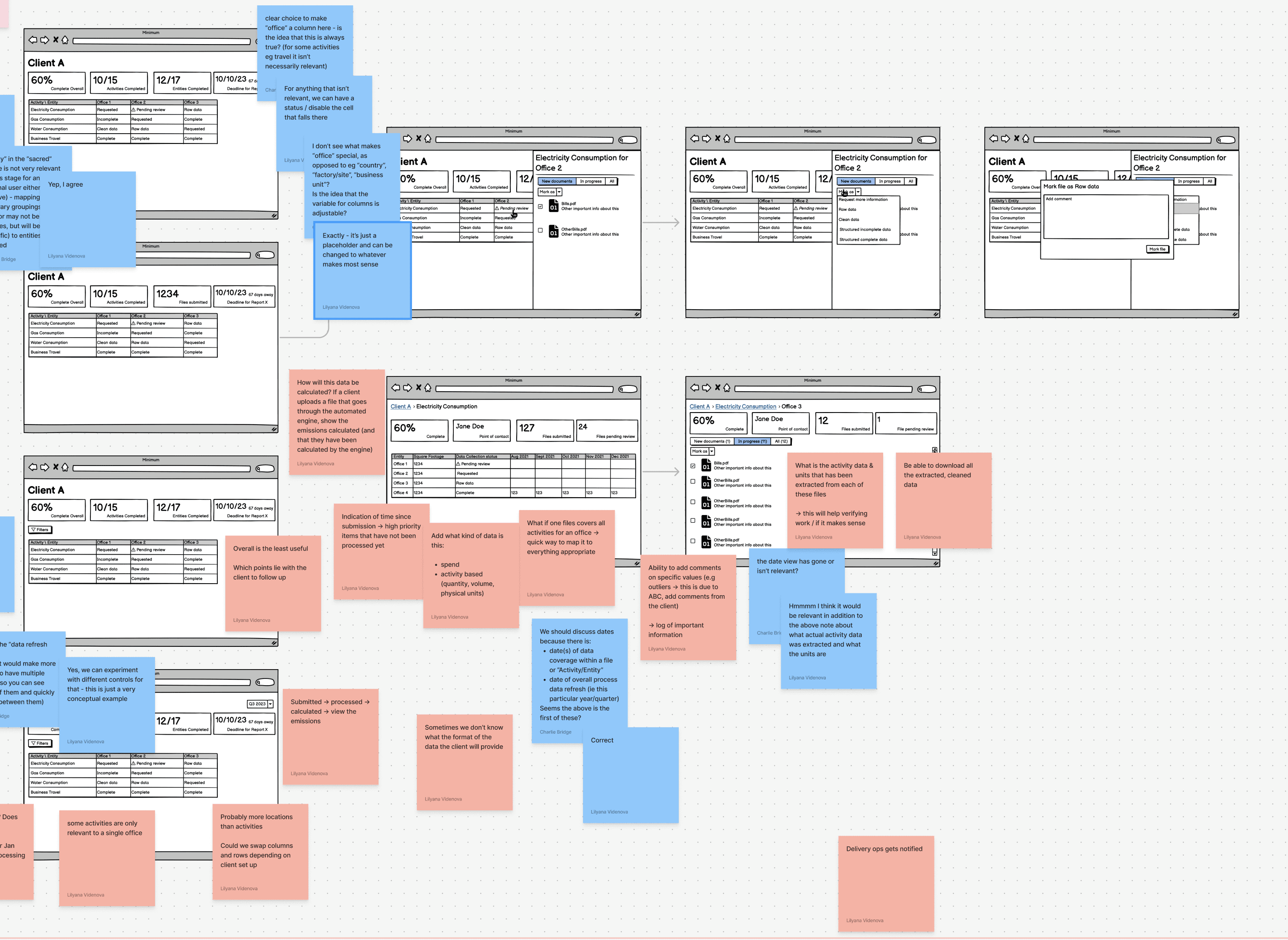
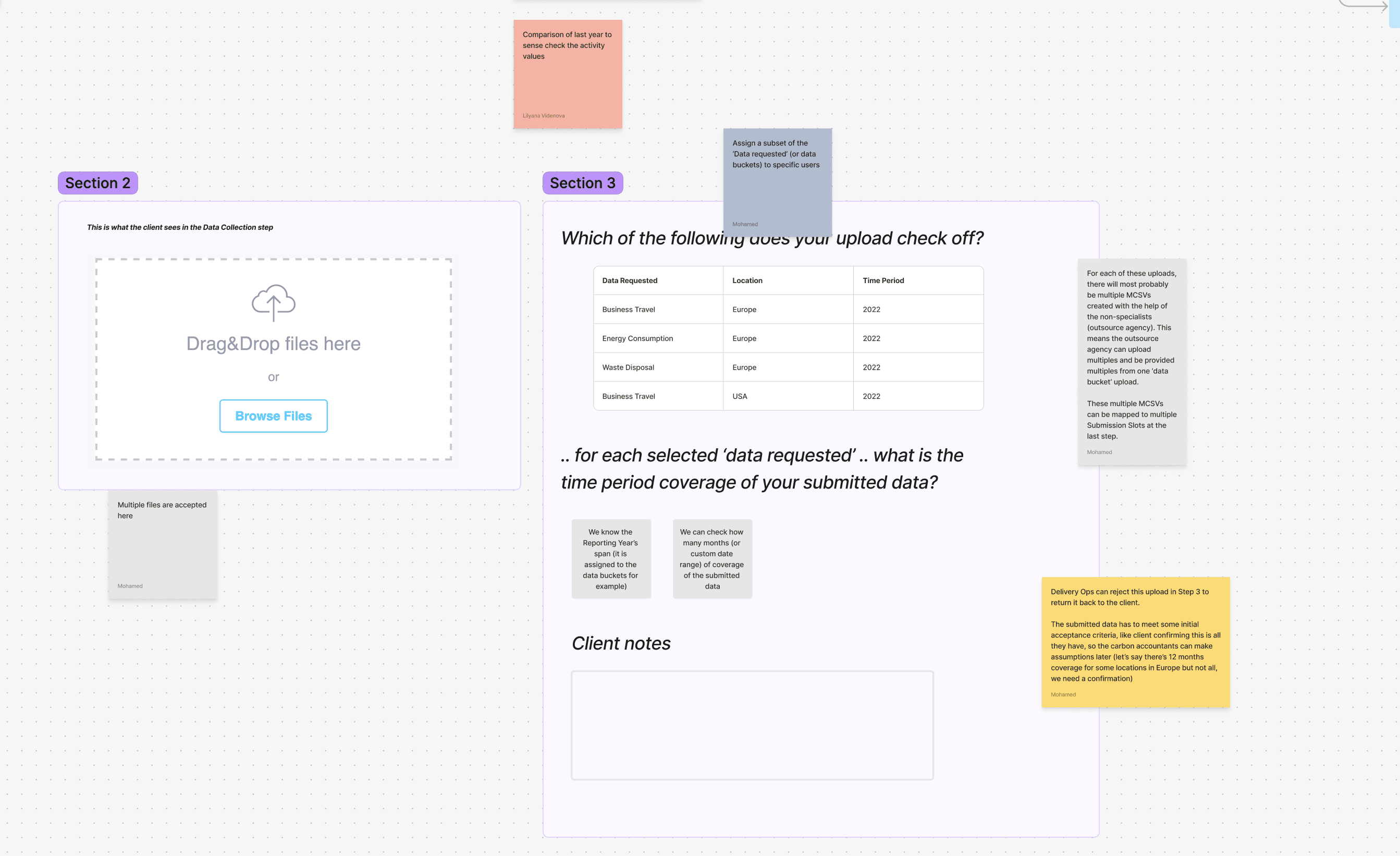
This might appear to be a rather slow process, however we completed the work described in this section in just under one month, delivering current and future state service blueprints, data models, user flows, and an interactive prototype, all of which acted as the basis of the following solution.
The Solution: Intelligent Automation with Human Insight
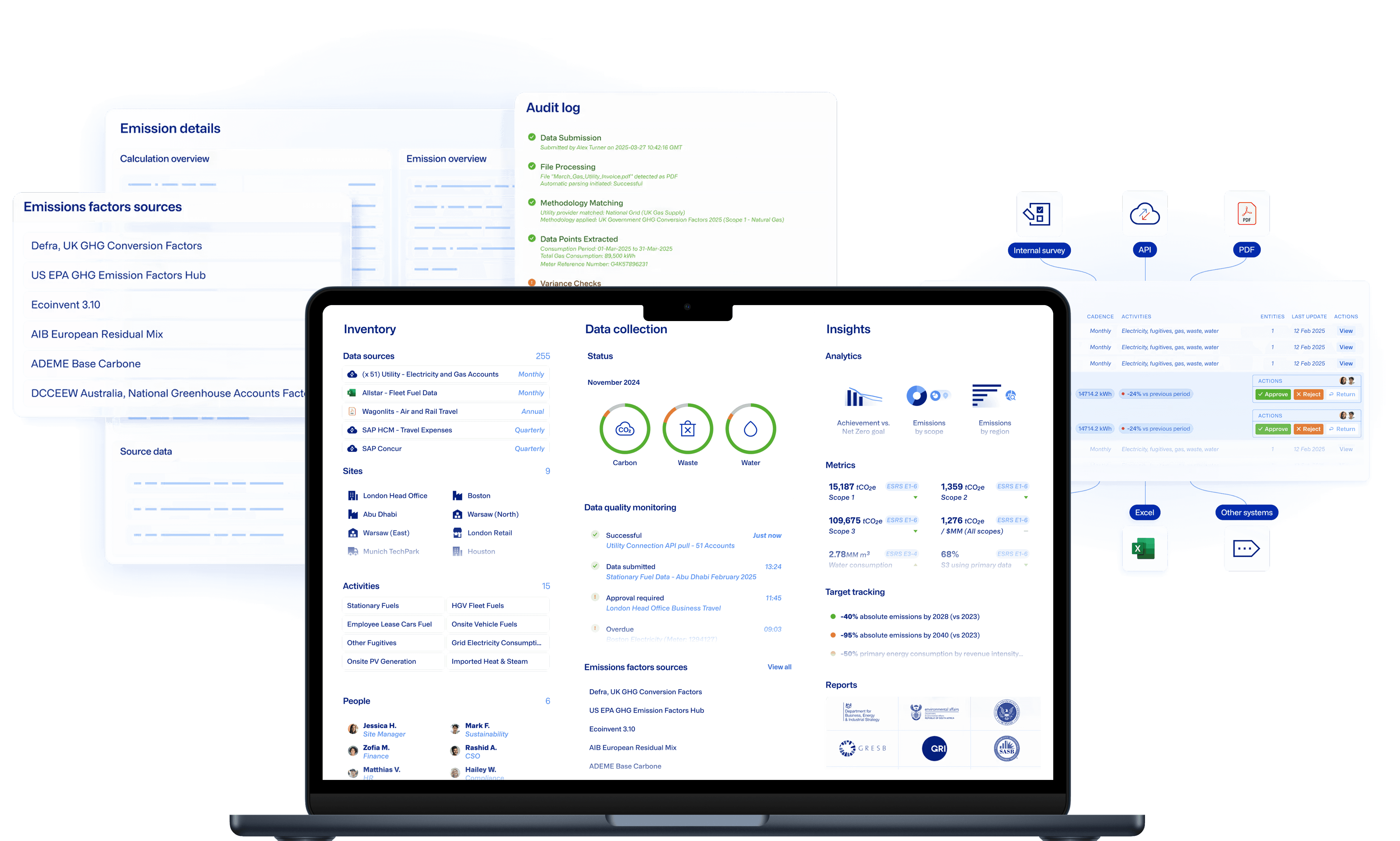
Internal automated system that handles the heavy lifting while keeping humans in control of critical decisions
Customer-Facing Platform: Transparency and Self-Service
Before: Clients submitted data and waited weeks for updates
After
Project Dashboard
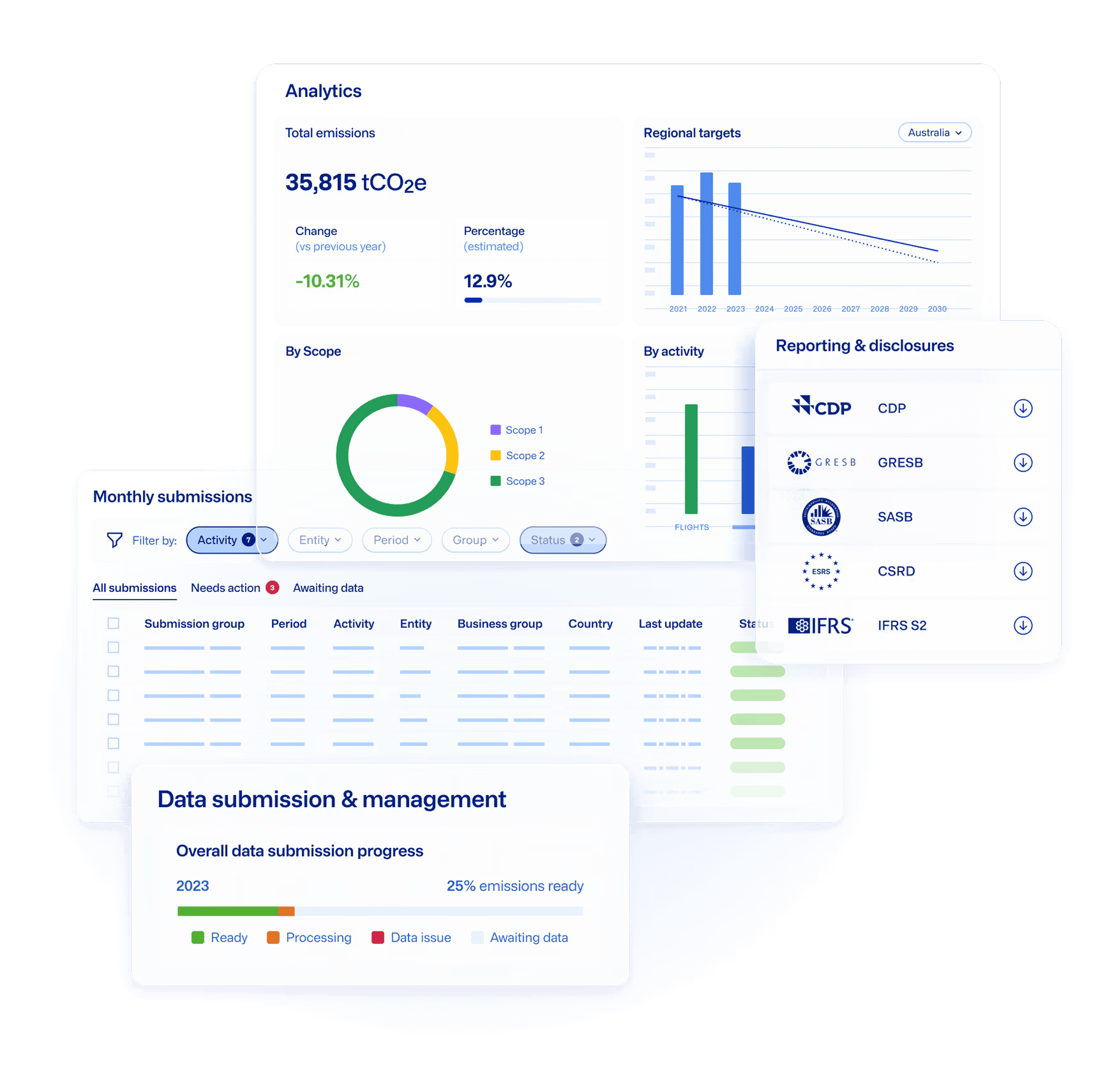
Customer Pain Point: Lack of visibility, updates, and understanding of the process, leading to multiple support tickets and low Net Promoter Score (NPS) results.Our Solution: Live visibility into data submission, calculation progress, and milestones.Results: 60% reduction in support ticket volume. 120% improvement in project visibility satisfaction.
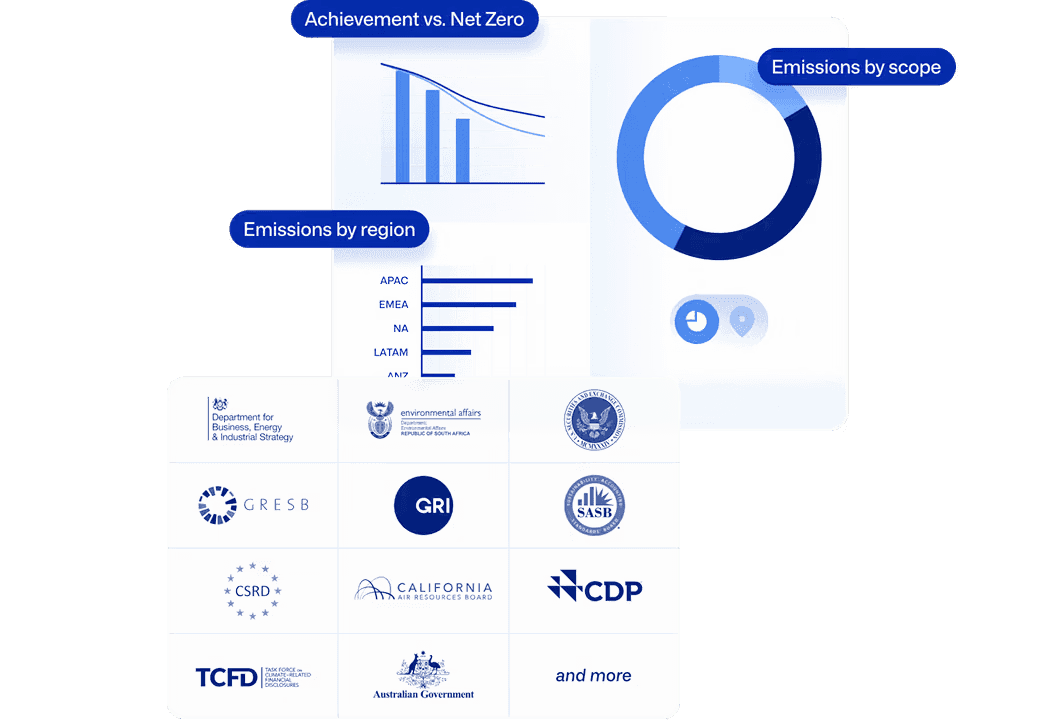
Self Service Reports
Customer Pain Point: As carbon accounting is becoming a requirement for companies, the number of specific reports for various governmental bodies had been steadily increasing and, due to all of them were prepared manually - so was the amount of time customers had to wait for them.
Our Solution: Customers can access and download reports independently.
Result: 85% adoption of new self-service features within the first two months.
Interactive Data Visualisation
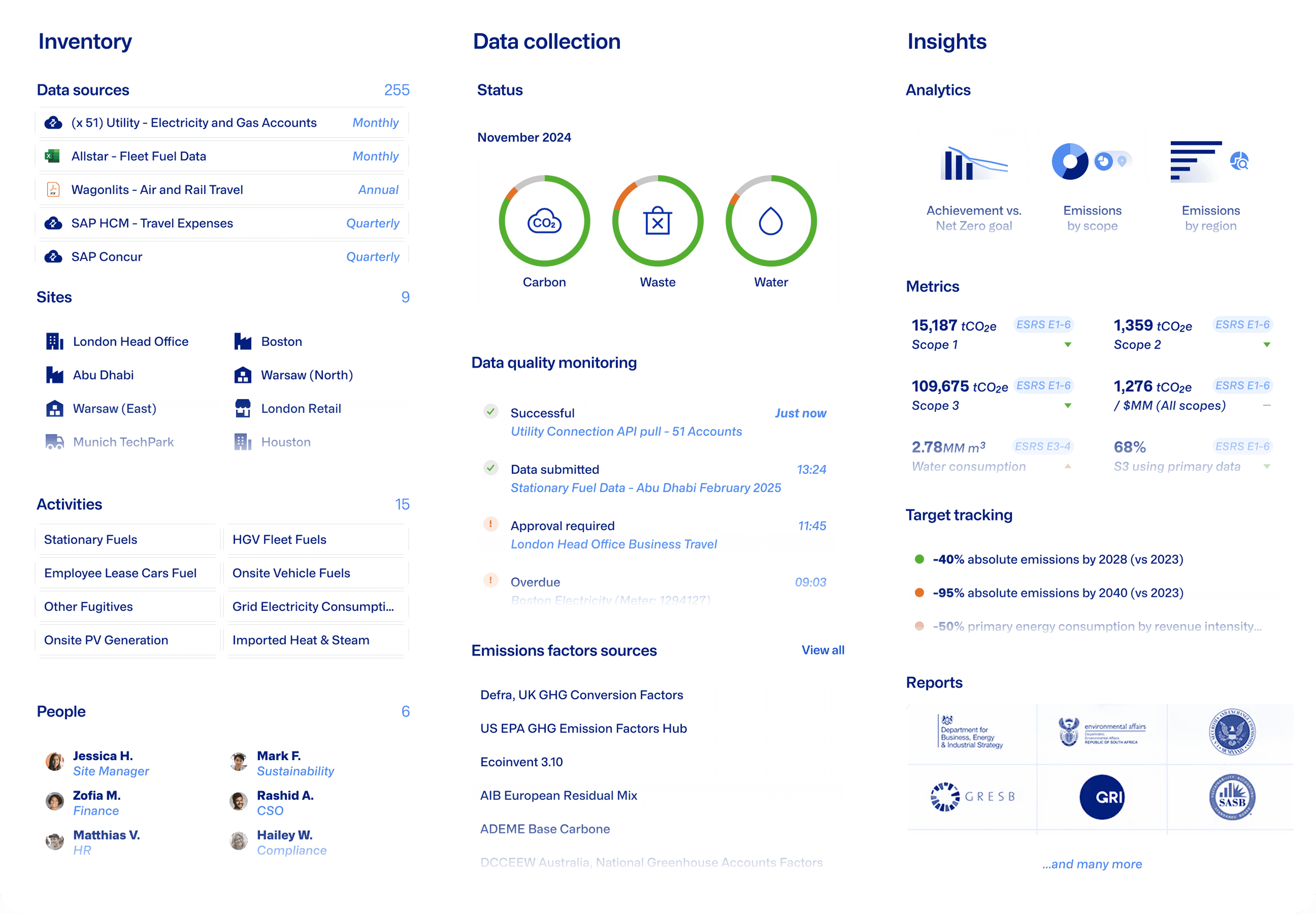
Customer Pain Point: Customers couldn’t understand the technical language used in static reports, leading to not being able to take any action to improve their results.
Our Solution: Carbon impact insights presented in engaging, actionable formats.
Results: NPS improved from 53 to 81 (that’s over 50% improvement).
What made this work
Collaboration was the key
This wasn't a solo effort - it was a masterclass in cross-functional collaboration. Working intensively with operations teams, engineering, and customers throughout the process was crucial for success.
User-Centred Design
Every design decision was validated against real user needs and workflows. No assumptions, no ivory tower thinking - just solutions that actually worked for the people using them.
Migration Strategy as Product Design
Treating the migration process as a design challenge in itself was critical. The transition experience was just as important as the final product.
Continuous Validation & Iteration
Built-in feedback loops and rapid iteration cycles ensured we could respond quickly to issues and opportunities as they emerged.
What We Learned
Early and Continuous Customer Communication
Keeping clients informed throughout the migration process turned potential anxiety into excitement about improvements.
Cross-Functional Validation
Having technical, operations, and compliance teams validate every design decision prevented costly mistakes and ensured feasibility.